
R Wangechi Njoroge recounts the loss of her brother in a fatal road crash and her family’s difficult search for answers, raising wider questions about accountability and the support available to families after road tragedies.
By Wangechi Njoroge
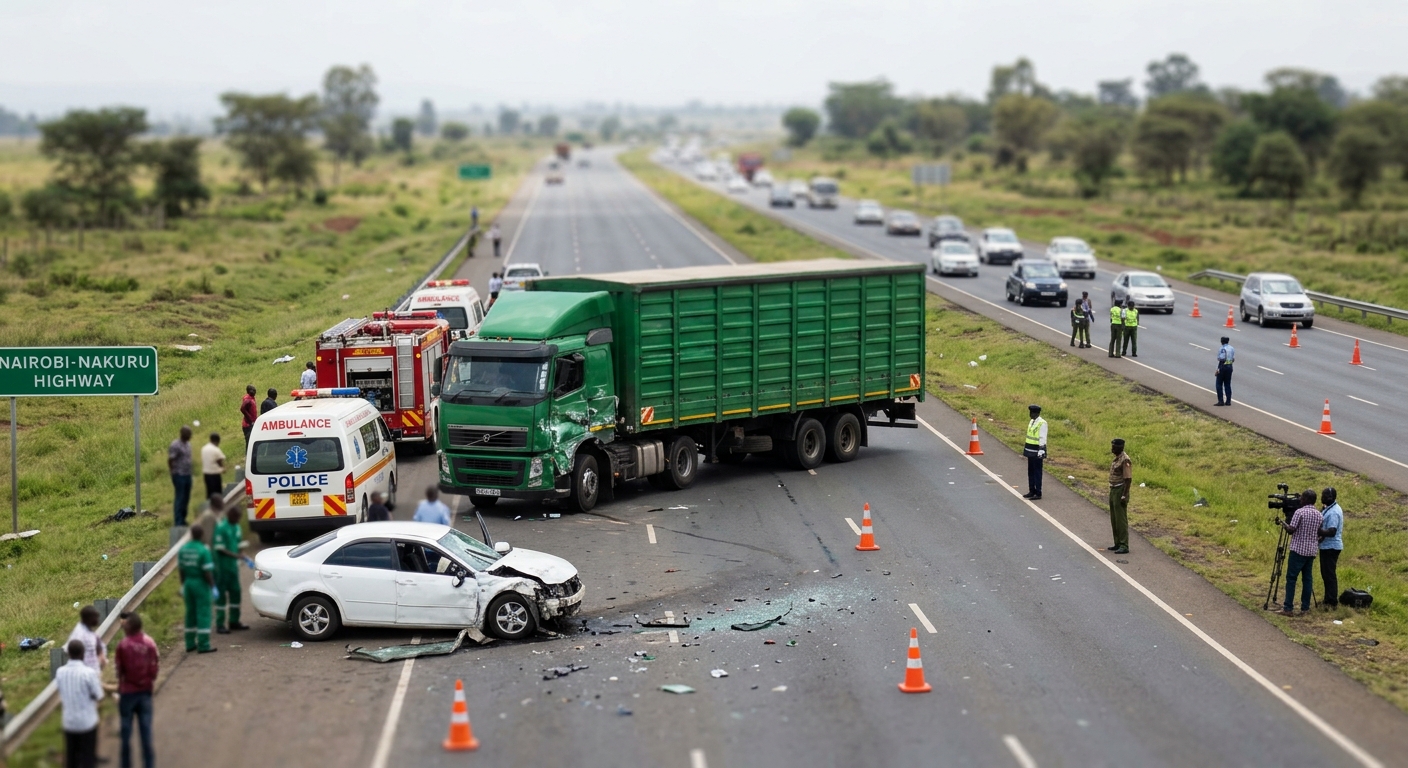
On May 7th, at around 6:30pm, along the Nairobi–Nakuru Highway, my brother Laban was hit by a lorry and died at the scene. He had alighted from a vehicle and was crossing the road on his way to visit me when the incident occurred. He was 27 years old, with his whole life ahead of him.
Earlier that evening, at around 6pm, we had spoken on the phone. He told me he was on his way to see me. I was preparing supper and expected him to arrive. He was with friends, and nothing about that conversation suggested that it would be our last.
As the evening went on, I tried calling him, but his phone was switched off. I became worried. I did not sleep well that night, wondering where he was and why I could not reach him.
The following morning, May 8th, I took the day off and began looking for him. I visited nearby shops, hoping someone might have seen him. At around 10am, while at a local butchery, I asked the owner if he had seen my brother. As we reviewed CCTV footage, he told me that a young man had been involved in a fatal road crash the previous evening. He advised me to check with the police.
That was when the search took a frightening turn.
I called my best friend in Nairobi and my grandmother, whom I had already told that Laban was missing. My grandmother pleaded with me not to go to the police station alone. A friend from the neighbourhood agreed to accompany me.
At around 1pm, we went to the police station. Officers showed me a photograph. It was Laban.
There are moments that change your life in ways you can never prepare for. That was one of them.
At around 2pm, accompanied by my uncle and aunt, I went to the morgue to identify his body. The reality of losing him was overwhelming. Laban was someone’s son, brother, grandson, nephew and uncle. He was deeply loved, and his death left a gap in our family that words cannot adequately describe.
At the morgue, an attendant advised us to understand the implications of any documents we were asked to sign at the police station, particularly in relation to our request for a post-mortem examination. We took that advice seriously.
When we returned to the police station, the first officer we spoke to asked us to sign an affidavit. We were concerned about what signing it might mean for our ability to establish the circumstances surrounding Laban’s death. We therefore asked for a post-mortem examination to be conducted before proceeding.
After further discussions, the examination was eventually carried out at around 6:30pm.
The following two weeks were spent dealing with the immediate demands of losing him and making burial arrangements. We were grieving and trying to come to terms with what had happened. But after the burial, other questions remained. We wanted to understand what had happened and what steps would follow.
About a month later, I returned to the police station to follow up on the case. I was informed that the file had been forwarded to the Office of the Director of Public Prosecutions (ODPP). When I followed up again, I received the same response.
On my third visit, I asked to speak to the Base Commander. I was initially told that the file was still with the ODPP. However, while I was in the office, the file was brought in. I was then informed that the matter would not proceed to prosecution. The explanation given to us was that there were insufficient witnesses to challenge the driver’s account. I was also advised that our family could pursue the insurance process.
I struggled to process what I was hearing. I cried and shook as I left the office. A friend who had accompanied me remained behind while the Base Commander explained the matter further.
For our family, the explanation left many unanswered questions. We understood that witnesses can be important in establishing what happened after a crash. But we also wondered what happens when people who may have witnessed an incident are unwilling to come forward. Fear, uncertainty or reluctance to become involved can leave families without the information they need.
The experience also made me think about the difficulties families face when trying to navigate the systems that follow a fatal crash. There are investigations, police procedures, post-mortem examinations, legal advice and insurance processes to understand, often at a time when families are still dealing with grief.
The process of seeking answers can become another burden.
I also began asking wider questions about road safety and accountability. How do we ensure that drivers are properly trained and that the standards expected of them are maintained? Are vehicle inspections being carried out consistently and objectively? How effectively are road crashes investigated, and what support is available to families when they seek answers?
These questions require attention from the institutions and organizations entrusted with road safety, law enforcement, driver training and vehicle regulation. They also require a willingness to examine how systems work in practice, particularly when a life has been lost and a family is seeking accountability.
There is a difference between preventing a crash and responding properly after one has occurred. Both matter. Road safety efforts must address the conditions that lead to crashes, but families must also be able to understand how incidents are investigated, how decisions are made and what avenues remain open to them.
For families like ours, the search for answers does not end with identifying a loved one’s body or laying them to rest. It continues through the difficult days and months that follow, as they try to understand what happened and come to terms with the loss.
When we remember those who have died on our roads, we must also remember the people they leave behind. Every fatal crash has consequences that extend far beyond the scene. Parents lose children. Children lose parents. Siblings lose brothers and sisters. Families are left to rebuild their lives while carrying questions that may not always be answered.
Laban had a life beyond the crash. He had people who loved him, relationships that mattered and a future we expected him to live. His death changed our family forever.
We remember him. We also want families affected by road crashes to receive clear information, fair treatment and the opportunity to pursue answers through the appropriate processes.
Remembering those we have lost must mean taking responsibility for preventing further loss, improving how crashes are investigated and ensuring that families are not left feeling alone in their search for answers.
Today we are marching and holding all these events to commemorate victims of RTA. But are they getting justice? Do we have the reforms to reduce accidents on the road when there is no accountability? Drunk driving is the norm every weekend, and somehow the very next weekend we drink and drive some more. Are we going to stop bribing? But most importantly, for the organizations here today, are we going to exercise our mandate as we are supposed to?