
By Timothy Albrite
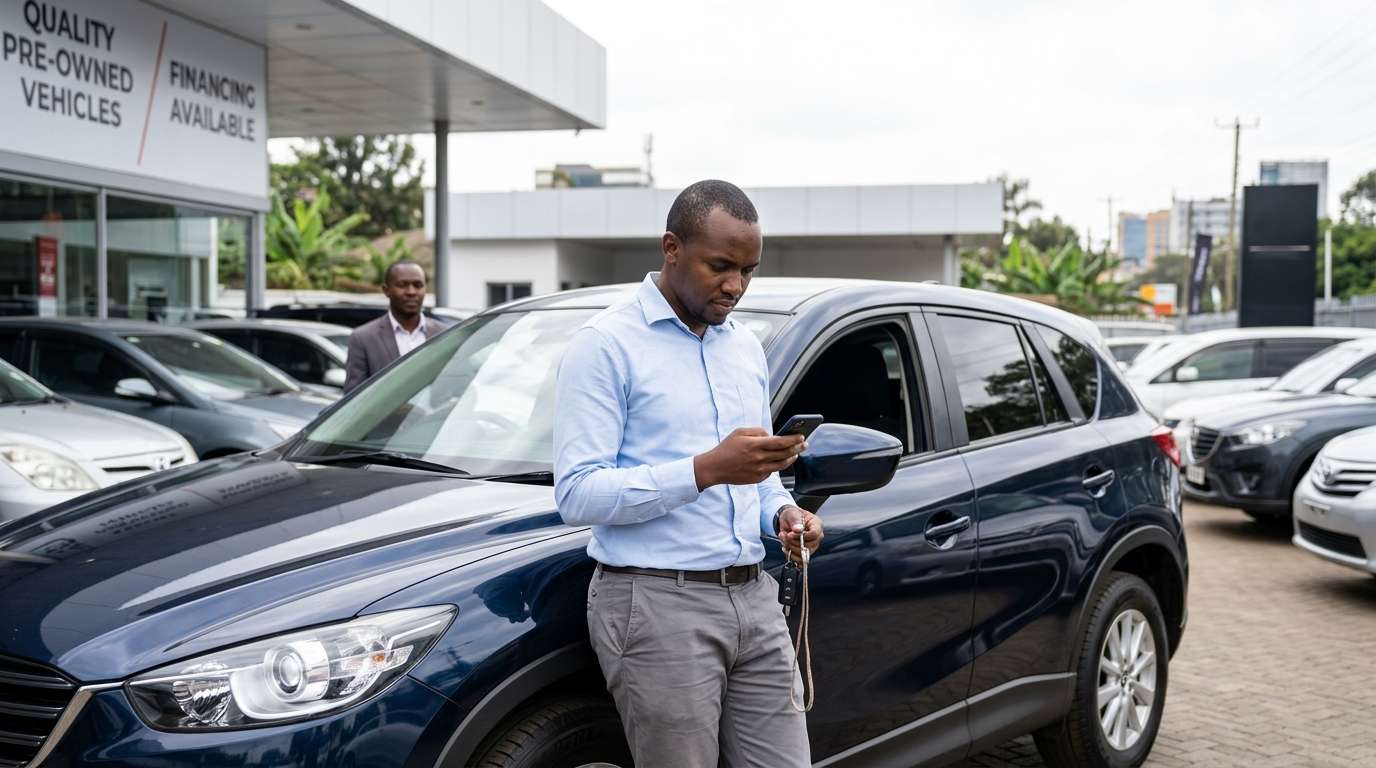
A 2014 Mazda CX-5 valued at KSh1.4 million.
Deposit: KSh500,000. Monthly instalment: KSh48,000.
For a young professional scrolling through TikTok, the deal can look manageable. But the monthly payment tells only part of the story.
After repayments, insurance, tracking fees, penalties and other charges, the total cost can rise significantly above the vehicle’s cash price. Miss several payments, and the same car could still be repossessed before the borrower has cleared the debt.
That is the concern emerging as “lipa mdogo mdogo” vehicle financing grows across Kenya’s social media platforms.
The monthly payment trap
Vehicle financing itself is not the problem. A properly structured asset-financing arrangement should clearly show the vehicle’s cash price, deposit, interest, total repayment, insurance obligations, penalties and ownership terms.
The problem comes when advertising focuses almost entirely on the monthly instalment.
Alternative lenders often target buyers who may not qualify for conventional bank loans, using messages such as “Drive today,” “No bank statements,” “No CRB problem,” “Low deposit” and “Instant approval.”
The appeal is obvious. A KSh45,000 monthly payment can feel achievable even when the total cost of the vehicle becomes difficult to justify.
When KSh300,000 becomes KSh612,000
One recent Kenyan dispute illustrates the concerns.
A businesswoman reportedly borrowed KSh300,000 using her vehicle’s logbook as security. According to repayment figures circulated online, she had paid more than KSh612,000 but was still reportedly facing an outstanding balance.
The figures included repossession fees, yard transfer charges, insurance-related costs and penalties. The vehicle was also reportedly repossessed more than once.
The lender’s full position in the dispute was not publicly available, so the claims cannot be treated as an established finding against the company.
However, similar complaints appear in online discussions, with borrowers describing additional charges that continue to increase their outstanding balances.
One borrower reported that interest on a financed vehicle would add nearly KSh500,000 to the cost over two years.
The real cost of the car
Consider a KSh1.5 million vehicle financed with a KSh300,000 deposit over 48 months. Depending on the lender and interest rate, the buyer could ultimately pay around KSh1.9 million to KSh2.1 million.
That is already substantially more than the cash price, but the costs can rise further where penalties, tracking, insurance loading, processing and recovery charges apply.
The important question is therefore not “Can I afford KSh49,999 a month?”
It is “How much will this car cost me when I make the final payment?”
When the car is repossessed
Under hire-purchase arrangements, the financier may retain ownership until the contractual conditions for transfer are met. This means defaulting on payments can expose the buyer to repossession, subject to the agreement and applicable law.
Disputes can arise over whether notices were properly issued, how penalties were calculated, recovery costs, auction procedures and the accuracy of outstanding balances.
For buyers, the lesson is simple: understand the default and repossession clauses before signing.
Why young buyers are vulnerable
For a young professional earning KSh80,000 a month, saving KSh1.5 million to buy a car outright may seem impossible. A KSh45,000 monthly payment, however, can initially appear manageable.
The vehicle may also be needed to generate income through ride-hailing, deliveries, logistics or business transport.
That creates additional pressure. The borrower needs the car to earn the money required to keep paying for the car.
Red flags before signing
Buyers should be cautious when they encounter:
- “Guaranteed approval”
- Extremely low deposits
- No clear total repayment figure
- Pressure to sign quickly
- Verbal promises missing from the contract
- Unclear repossession terms
- No detailed repayment schedule
Vehicle financing can help families and businesses access mobility. But affordability should never be measured by the monthly instalment alone.
Before signing, calculate the full cost of the vehicle, including every fee, interest charge and potential penalty.
Because sometimes the car does not become expensive when you buy it.
It becomes expensive every month you keep paying for it.