
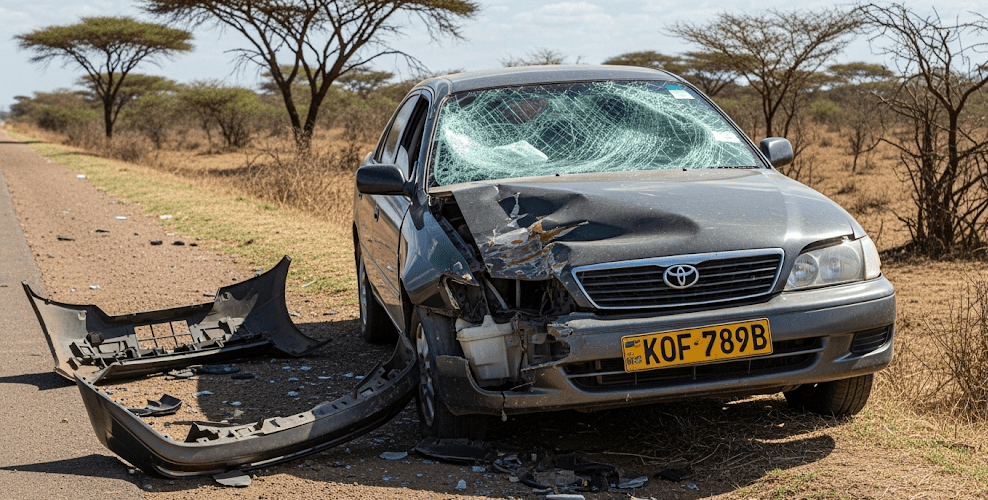
When a road crash occurs in Kenya, more often it is bystanders, bodaboda riders, or motorists on the same road who are usually the first on the scene. But what should they do once there? The decisions you make in those first few minutes can save lives, or put more at risk.
If you or someone you know finds themselves in this situation, this is what to do.
- Pull Over Safely and Stay Calm
Your safety comes first. If driving, signal, slow down, and park well off the road, at least 10–15 metres from the crash site. Turn on your hazard lights. If you have a reflective triangle, place it behind your vehicle and another one behind the wreck about 50 metres back if it’s on a highway.
You’re about to help, and staying calm is your greatest asset. - Scan the Scene for Danger
Before approaching the vehicles, assess the surroundings. Is there smoke, leaking fuel, or fire? Are any of the vehicles at risk of rolling or tipping? Are power lines down?
If you’re carrying a reflective vest (and you should), wear it. Use your phone’s flashlight if it’s dark. Do not enter a wrecked vehicle or stand between two cars especially on busy roads. - Call Emergency Services Immediately
In Kenya, the emergency number for the police is 999 or 112. You can also reach ambulance services on these numbers or via specific service providers. Provide clear, calm, and concise information:
• Your exact location (use road signs, landmarks, or GPS)
• Number of vehicles and injured people
• Whether anyone is unconscious, trapped, or bleeding
• Signs of fire, fuel leak, or road blockage
The dispatcher may guide you through basic aid until help arrives. Keep your phone line open.
- Approach the Victims Carefully
If it’s safe, go to the vehicles. Knock on the window or gently speak to the driver or passengers: “Can you hear me?” “Can you move your fingers or toes?” “Is anyone else inside the car?”
Reassure them. Let them know help is coming. Do not move them unless they are in immediate danger (e.g. the vehicle is on fire or filling with smoke). Spinal injuries are common, and moving someone can cause lasting damage.
If a person is unconscious but breathing, and there’s no spinal injury risk, place them in the recovery position — on their side, with their airway open. If someone is bleeding heavily, use a clean cloth or clothing to apply firm pressure to the wound. - Enlist Bystanders to Help
You don’t have to do everything alone. Ask others to help:
• One person can manage traffic
• Another can guide emergency responders to the exact location
• Others can comfort victims or assist with first aid if trained
• Keep the crowd under control — discourage photos, videos, or speculation. This isn’t the time for social media. - Stay Until Help Arrives
When emergency responders get to the scene, give them all the information you have. Be factual: what you saw, what the victims said or looked like, and what actions you took.
If the police request a witness statement, provide your contact details and cooperate fully. Your testimony may be important later. - Take Care of Yourself Too
Witnessing or responding to a crash can be traumatic. It’s normal to feel shaken, overwhelmed, or even emotional hours or days later. Talk to someone a friend, counsellor, or professional, if you need to process what happened.