
By Timothy Albrite
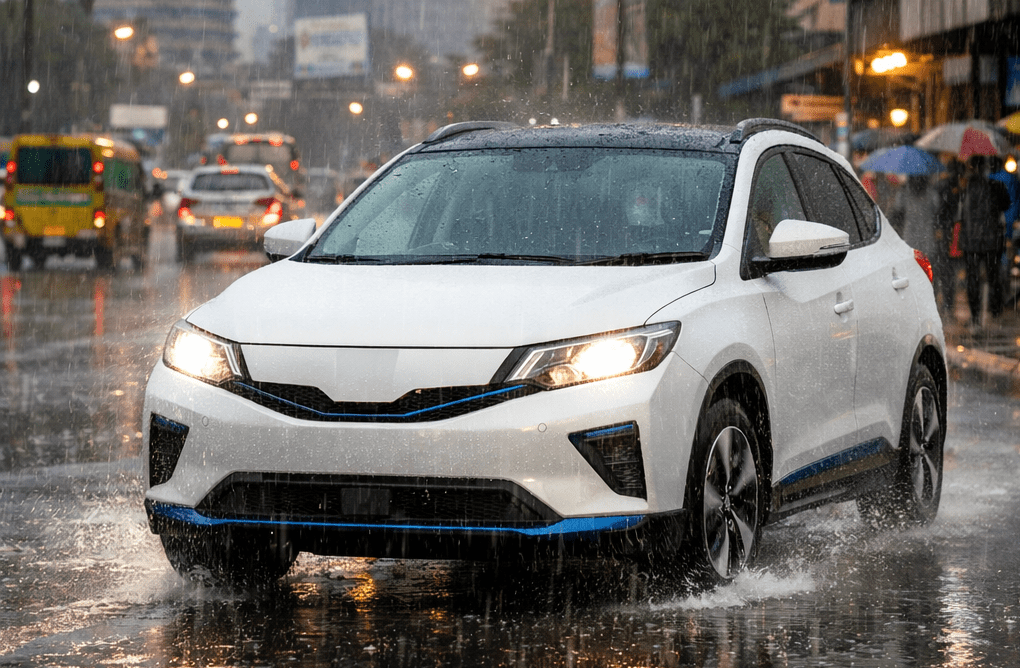
As electric cars slowly make their way onto Kenyan roads, one question keeps coming up whenever the skies open up: are they safe to drive in the rain?
They are.
Electric vehicles are built with sealed battery packs and protected electrical systems. The parts that carry high voltage are insulated and positioned so that water cannot easily reach them. Driving in the rain, through puddles, or leaving the car parked outside during a storm does not damage the battery or the motor.
On wet roads, an electric car behaves much like any other vehicle. Tyres still lose grip when the surface is slippery. Brakes still need a longer distance to stop. Visibility still drops in heavy rain. One small advantage EVs have is their low centre of gravity, because the battery sits under the floor. This can help the car feel more stable on wet tarmac compared to taller vehicles.
Charging in rainy weather is also safe. Public chargers and home charging units are designed for outdoor use. Power only flows once the plug is properly connected, so rain alone will not cause a shock or harm the car. What drivers should avoid are makeshift charging arrangements, such as using extension cables or unprotected sockets outdoors.
Rain can affect driving range slightly. Wet roads create more resistance, and bad weather usually means heavier traffic, lights switched on, and more use of wipers and air conditioning. All of these draw power from the battery. The difference is usually small, but it can be noticeable on long trips.
Flood water is where caution is needed. Deep water is risky for any vehicle. It can damage brakes, bearings, and interior electronics. If water rises high enough to reach the underside of the car, it can also affect the battery housing. The safest rule is the same one drivers already know: if the road looks flooded, it is better to turn back.
In normal rain, electric cars are not at a disadvantage. They handle wet conditions much like petrol and diesel vehicles. The bigger issues remain road drainage, surface condition, and how carefully the driver reacts to the weather.