
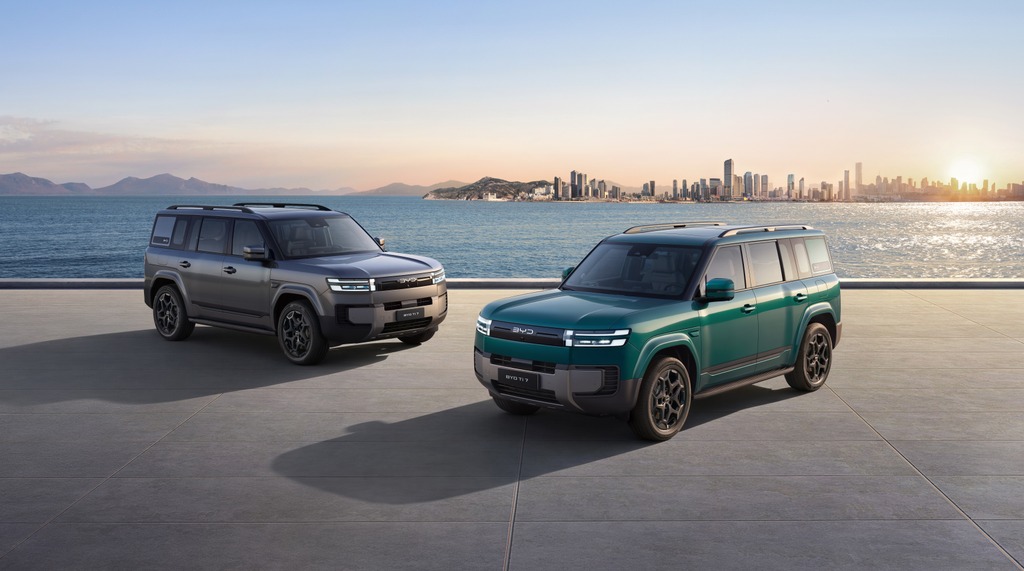
Walk into a new-car dealership in Kenya today and you may notice something has changed. The familiar Japanese/German/Korean badges are still there, but they are no longer alone.
BYD, Changan, Skyworth, NETA, Haval, Jetour, JAC, Jetour, GWM, MG and other Chinese brands are increasingly finding space on Kenyan roads.
Their appeal is easy to understand: modern designs, generous equipment, competitive prices and, increasingly, hybrid and electric powertrains.
For years, many Kenyan motorists hardly needed to think twice when buying a new car. Toyota, Nissan, Mazda, Subaru and Honda were familiar choices, backed by established dealer networks, mechanics who knew them and a strong second-hand market.
Chinese manufacturers are challenging that comfort zone.
And they are doing it with cars that can be difficult to ignore.
A Chinese SUV may arrive with a large digital display, a 360-degree camera, advanced driver-assistance systems, a panoramic roof and a long list of comfort features sometimes at a price that would have seemed ambitious from an established brand not long ago.
But features alone do not make a good car.
The bigger question for a Kenyan buyer is what happens after the excitement of the showroom wears off.
Can I get the parts?
Who will service it?
What happens when the warranty expires?
And what will it be worth when I want to sell it?
These questions matter because buying a car in Kenya is rarely just about the purchase price. A vehicle can look like a bargain at the showroom and become expensive if parts are difficult to source, repairs take weeks or specialist technicians are unavailable.
This is where Chinese brands still have something to prove.
It would be unfair, however, to treat “Chinese cars” as one category.
China has become a major force in global vehicle manufacturing, with manufacturers investing heavily in research, software, batteries, electric drivetrains, safety and design.
Some brands have developed substantial international operations and increasingly sophisticated products. Others have a much shorter history and a smaller footprint.
That distinction matters.
The same caution applies to reliability. There is growing evidence that modern Chinese vehicles can compete seriously on engineering and equipment, but Kenya does not yet have decades of experience with many of these newer models. Whether a particular vehicle will still be trouble-free after eight or ten years on Kenyan roads is a question that only time can properly answer.
The after-sales network may therefore be more important than the badge.
A strong local distributor, trained technicians, genuine parts, diagnostic equipment and a clear warranty can make the difference between a sensible purchase and an expensive headache.
Resale is another unknown. Japanese brands have spent decades building consumer confidence in Kenya, and that confidence supports their second-hand values. Newer Chinese brands have yet to establish the same track record. The first owner, in many cases, is helping create the used-car market that future buyers will judge.
Electric and hybrid models add another dimension.
Chinese manufacturers have become particularly strong in these technologies, offering Kenyan motorists alternatives to conventional petrol and diesel vehicles. For urban driving, lower running costs and, in the case of The Chinese Car Wave: Would You Buy One?
Walk into a new-car showroom in Kenya today and you may notice something has changed. The familiar Japanese badges are still there, but they are no longer alone.
BYD, Changan, Haval, Jetour, JAC, GWM, MG and other Chinese brands are increasingly finding space on Kenyan roads. Their appeal is easy to understand: modern designs, generous equipment, competitive prices and, increasingly, hybrid and electric powertrains.
For years, many Kenyan motorists hardly needed to think twice when buying a new car. Toyota, Nissan, Mazda, Subaru and Honda were familiar choices, backed by established dealer networks, mechanics who knew them and a strong second-hand market.
Chinese manufacturers are challenging that comfort zone.
And they are doing it with cars that can be difficult to ignore.
A Chinese SUV may arrive with a large digital display, a 360-degree camera, advanced driver-assistance systems, a panoramic roof and a long list of comfort features — sometimes at a price that would have seemed ambitious from an established brand not long ago.
But features alone do not make a good car.
The bigger question for a Kenyan buyer is what happens after the excitement of the showroom wears off.
Can I get the parts?
Who will service it?
What happens when the warranty expires?
And what will it be worth when I want to sell it?
These questions matter because buying a car in Kenya is rarely just about the purchase price. A vehicle can look like a bargain at the showroom and become expensive if parts are difficult to source, repairs take weeks or specialist technicians are unavailable.
This is where Chinese brands still have something to prove.
It would be unfair, however, to treat “Chinese cars” as one category. China has become a major force in global vehicle manufacturing, with manufacturers investing heavily in research, software, batteries, electric drivetrains, safety and design.
Some brands have developed substantial international operations and increasingly sophisticated products. Others have a much shorter history and a smaller footprint.
That distinction matters.
The same caution applies to reliability. There is growing evidence that modern Chinese vehicles can compete seriously on engineering and equipment, but Kenya does not yet have decades of experience with many of these newer models. Whether a particular vehicle will still be trouble-free after eight or ten years on Kenyan roads is a question that only time can properly answer.
The after-sales network may therefore be more important than the badge.
A strong local distributor, trained technicians, genuine parts, diagnostic equipment and a clear warranty can make the difference between a sensible purchase and an expensive headache.
Resale is another unknown. Japanese brands have spent decades building consumer confidence in Kenya, and that confidence supports their second-hand values. Newer Chinese brands have yet to establish the same track record. The first owner, in many cases, is helping create the used-car market that future buyers will judge.
Electric and hybrid models add another dimension. Chinese manufacturers have become particularly strong in these technologies, offering Kenyan motorists alternatives to conventional petrol and diesel vehicles. For urban driving, lower running costs and, in the case of EVs, access to Kenya’s increasingly relevant charging network can be attractive. But battery support, charging availability and long-term replacement costs still need consideration.
So, would I buy one?
Possibly.
But not simply because it has more screens, cameras or features for the money.
I would want to know who stands behind the car, where it will be serviced, how easily parts can be obtained and whether the manufacturer and distributor are likely to be around years from now.
The Chinese car has already arrived in Kenya. The question is no longer whether it belongs here.
The question is which brands will earn our trust.