
By Timothy Albrite
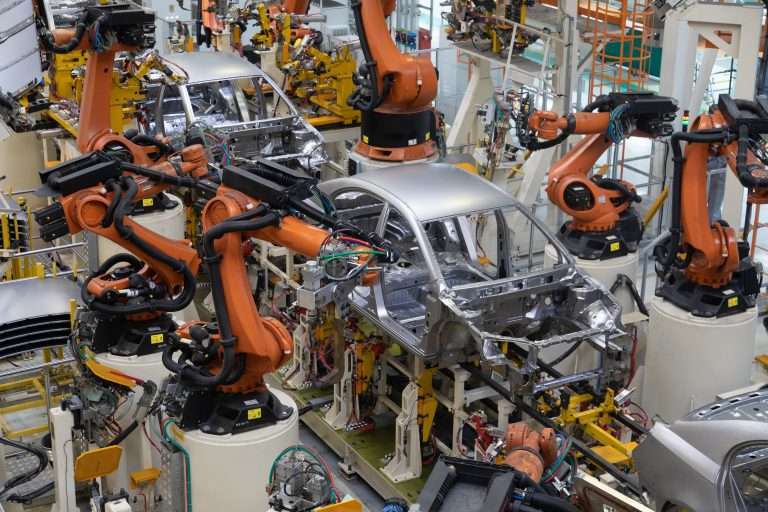
On a typical day in Mombasa or Thika, the work inside Kenya’s vehicle assembly plants looks much like it always has. Crates come in, parts unpacked, chassis take shape. By the end of the line, a vehicle rolls out.
There’s no big sign announcing change. But when you look closer, something is different.
Some of those crates no longer carry engines, gearboxes and fuel systems. They carry battery packs, electric motors and control units. The shift is subtle, almost easy to miss, yet it says a lot about where the industry is heading.
Kenya’s journey into vehicle assembly is no accident. It has been built patiently over decades. Longtime players like Associated Vehicle Assemblers (AVA) and Kenya Vehicle Manufacturers (KVM) have supplied governments, businesses, and private buyers for generations, turning out thousands of trucks and passenger vehicles each year. That legacy scaffolds what comes next.
The 2026 National e-Mobility Policy has propelled companies like Roam and Tad Motors into the forefront of this transition. Roam operates a massive facility in Nairobi capable of producing 50,000 electric motorcycles annually, while Tad Motors has launched Kenya’s first locally assembled electric SUV in Naivasha. Other notable entrants, including Autopax, Kiri EV, and MojaEV, are leveraging established plants like AVA and KVM to introduce diverse fleets, supported by a growing network of battery-swapping stations and tax incentives designed to phase out internal combustion engines.
The clearest signs are not in showrooms, but on the road. Electric motorcycles have quietly taken off in Kenya’s delivery economy. They make sense for riders who clock long hours and tight margins. Lower fuel costs matter. So does simpler maintenance.
Then there are the buses. In Nairobi, a growing number of electric buses are now part of daily operations. BasiGo has been at the centre of that rollout, working with local assembly partners while sourcing key components internationally. For operators, the calculation is straightforward. Fuel savings over time can outweigh the higher upfront cost.
Passenger vehicles are moving more slowly. There is interest, and there are early efforts to assemble electric cars from knocked-down kits, but volumes remain low. For most buyers, price, charging access and familiarity still shape decisions.
Behind all this sits a supply chain that stretches far beyond Kenya.
China plays a central role, not through visible factory investments, but through the parts that make these vehicles work. Batteries, electric drivetrains and vehicle platforms often originate from Chinese manufacturers, who dominate this space globally.
In Kenya, those components arrive as part of a partnership model. Local firms handle assembly and market entry. International suppliers provide the technology. It’s a practical arrangement, and one that fits neatly into the country’s existing assembly structure.
Government policy has started to support the shift. Tax incentives on electric vehicles and selected components have lowered the cost of entry, at least for early adopters and fleet operators. Charging infrastructure is expanding too, though mostly in urban areas where demand is concentrated.
Even with that progress, the scale remains modest. Kenya’s EV market is growing, but it is still in its early stages. Most of the real activity sits in commercial use; motorcycles, buses, and fleet vehicles, where the numbers add up quickly.
Inside the factories, the change is less about disruption and more about adjustment. The same workers, the same lines, the same process, just a different set of components moving through the system. It doesn’t look like a revolution. It looks like a transition.
And maybe that’s the point.
Kenya isn’t trying to leapfrog into full-scale EV manufacturing overnight. It’s working with what it already has. Assembly plants, technical skills, and a market that is slowly opening up to electric mobility.
The bigger question remains: what comes next? While assembly creates jobs and builds experience, much of the value in electric vehicles still resides in the imported components. How Kenya navigates this landscape will determine the future of its automotive industry in an increasingly electrified world.