
By Timothy Albrite
Kenya’s motoring market has taken several decisive turns. We are witnessing not just new car launches, but deeper shifts: global brands setting up local assembly lines, dealers expanding their brand portfolios, and electric mobility gaining real traction in public transport. The result is greater choice, tougher competition, and a more mature auto-market.
1.New players hit the ground running
Jetour makes a bold entry
Chinese automaker Jetour officially entered the Kenyan market launching four SUV models: the T2, T1, X70 Plus, and Dashing. Retail prices start around KSh 4.9 million and go up to KSh 7.8 million, making Jetour arguably one of the most aggressively priced mid-SUV contenders in the market right now.
The local distributor, Global Motors Centre Limited has plans for local assembly, signalling an investment of about KES 1.4 billion. This investment is expected to build their presence, create jobs, and make Detour part of Kenya’s automotive ecosystem.
JMC (via Caetano Kenya) arrives with light commercial vehicles
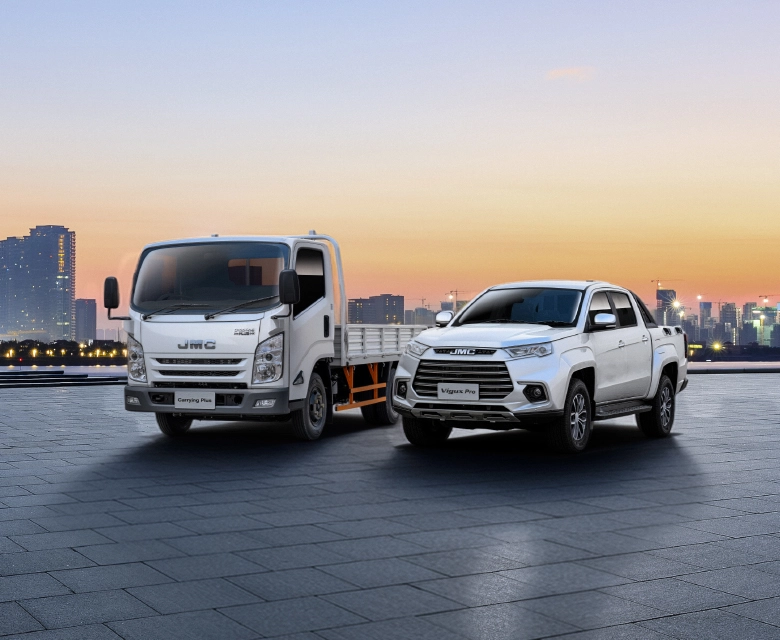
Another significant development came earlier in 2025 when Caetano Kenya introduced the JMC brand to Kenya. The initial product line Vigus Pro (single cab, double cab) and a light commercial “Carrying Plus” truck is being assembled locally from CKD kits. The JMC vehicles are pitched at professionals and businesses needing affordable, durable workhorses.
This move reflects a broader ambition where apart from just selling vehicles , Caetano is building local capacity, creating jobs, and contributing to the growth of Kenya’s automotive industry.
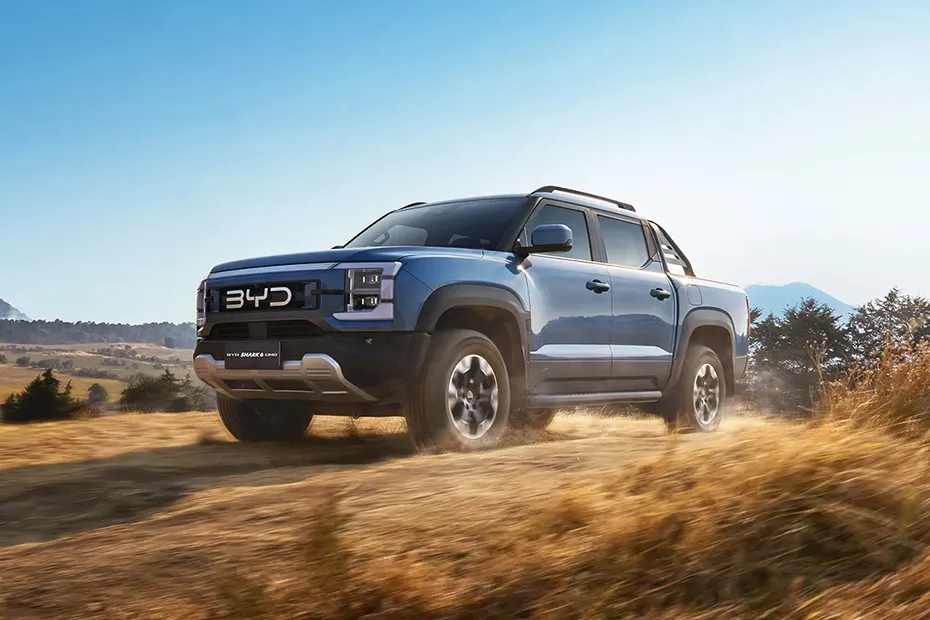
BYD Shark 6 joins Kenya’s roads a hybrid pickup that bridges worlds
In September 2025, BYD, through its distributor CFAO Mobility Kenya (via leasing and mobility arm Loxea) officially introduced the Shark 6, the country’s first plug-in hybrid (PHEV) double-cabin pickup.
• The Shark 6 blends a 1.5 litre petrol engine with electric motors, delivering a combined range of up to 650 km on a full tank and charge.
• Efficiency claims are compelling: as low as 2.0 litres per 100 km when the battery is charged.
• To make it more accessible, Loxea teamed up with NCBA Bank to offer up to 90% financing, repayable over five years, a first-of-its-kind scheme for a hybrid/EV in Kenya.
The Shark 6 sold out its first batch within days, prompting Loxea to place a replenishment order a clear signal that hybrid-powered pickups are no longer a curiosity but a viable option for Kenyan buyers.
In a market long dominated by diesel and petrol pickups, Shark 6 stands out as a bridging product: giving users the familiarity and flexibility of ICE when needed, with the environmental and fuel-cost benefits of hybrid tech.
2.Dealerships reposition: more brands, more choices under one roof
Urysia Limited transitions from single-brand to multi-brand dealership
Urysia , long known to Kenyans mainly as a dealer of Peugeot has undergone a strategic transformation. In November 2025, the company officially added two global heavyweights to its stable: Jeep and Citroën. That means under one showroom roof today: Peugeot, Jeep, and Citroën.
The expanded offering is designed to serve a wide spectrum of buyers from families and urban drivers to adventure seekers, SMEs, fleet operators, and ride-hailing services. Urysia has also beefed up its after-sales network with service centres, partner workshops, even mobile service units.
For many dealers, this multi-brand strategy seems to be the new path forward offering variety, convenience, and a tighter alignment with evolving customer needs.
3.Electric Mobility Moves from Fringe to Mainstream of Public Transport
BasiGo expands fleet, charging network driving Kenya’s EV bus ambitions forward
On the public transport front, BasiGo has emerged as arguably Kenya’s most ambitious e-mobility player. The company recently announced it has delivered 100 electric buses across Kenya and Rwanda. A milestone that transforms the electric-bus narrative from pilot trials to scalable reality.
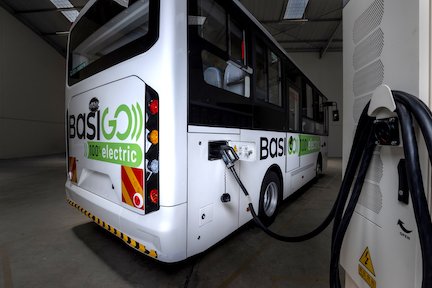
In 2025 alone, the company launched three new DC fast-charging depots in Nairobi in Komarock, Taj Mall, and Riruta, with a fourth scheduled for Juja. Each hub can service 100 buses per day, and together they form one of the largest networks of high-power chargers for buses in Kenya.
Producing these buses locally, BasiGo has ramped up output: monthly assembly jumped from 10 to 20 buses after a major Sh5.4 billion funding round. This funding is being used not only for assembly capacity, but also to setup charging infrastructure and expand support services.
On the product side, BasiGo has also announced a partnership with global bus maker King Long Bus Company to locally assemble the next-generation electric city bus model, the KL-9, a vehicle designed to meet Kenya’s mass-transit needs, with a capacity of 54 passengers, 400 km daily range, and fast charging (2 hours).
With the charging infrastructure in place, increasing production capacity, and rising interest from SACCOs and fleet operators, BasiGo is pushing Kenya’s public transport into a new, cleaner, modern era.
What This Means for Kenyan Motorists Going Forward
• For individual buyers, vehicles like the BYD Shark 6 offer a compelling “best of both worlds” modern hybrid efficiency for city driving, flexibility for long trips or rough terrain.
• For public transport operators, the growing BasiGo network shows that EV buses are becoming real, fast-charging, serviceable alternatives to diesel potentially lowering running costs, reducing emissions, and improving passenger experience.
• For the market at large, 2025 marked a turning point: from occasional EV imports and experiments to serious, scalable adoption backed by financing, local assembly, and infrastructure.
As we move deeper into the decade, expect more brands and business models to enter the fray.