
Powered by STOP THE BLEED® Kenya initiative
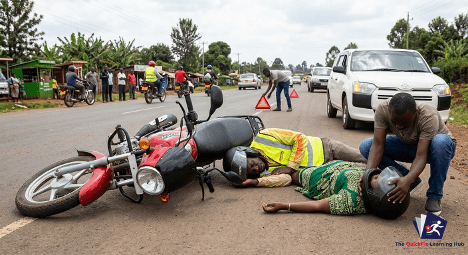
Boda-bodas are the heartbeat of East African transit, but motorcyclists and their passengers are also among the most vulnerable road users. When a two-wheeled accident happens, a motorist is usually the very first person on the scene.
Do you know what to do – and more importantly, what NOT to do – in those critical first minutes?
This month, powered by the STOP THE BLEED® initiative, we are diving into the two most vital rules for managing motorcycle accident trauma: handling helmets and stabilizing broken bones.
1. The Golden Rule of Helmets: Hands Off!
When a rider or passenger is thrown from a bike, the impact puts tremendous stress on their head and neck. Your natural instinct might be to pull their helmet off so they can breathe or so you can check for injuries.
The Rule: NEVER remove a rider’s helmet unless it is absolutely necessary to save their life (e.g., they are not breathing, they are choking, or their airway is completely blocked).
Why it matters: The helmet acts as a natural brace. If the rider has a cervical spine (neck) injury, yank or pull the helmet can shift broken vertebrae and cause permanent paralysis or death.
What to do instead: If they are conscious and breathing, leave the helmet on, keep them completely still, and unfasten the chin strap only if it is constricting their breathing.
2. Immobilizing Broken Bones with What’s in Your Car
Motorcycle crashes frequently result in severe fractures to the arms and legs. An unstable bone can slice through blood vessels internally, leading to catastrophic bleeding. Your goal as a first responder is to immobilize the limb before emergency medical services arrive.
If you don’t have a professional splint, look around your vehicle for everyday items to create an improvised splint:
- The Support: Use a sturdy object like an umbrella, a thick rolled-up newspaper, a heavy cardboard box piece, or even a vehicle floor mat.
- The Padding: Cushion the limb by wrapping it in a soft jacket, hoodie, or a beach towel to prevent further pain and tissue damage.
- The Tie: Secure the support gently above and below the fracture site using a triangular bandage from your first aid kit, extra clothing, or a belt.
Important: Never try to “straighten” a bone or force a joint back into place. Splint the limb exactly in the position you found it.
🚨 Quick Action Checklist for Boda-Boda Incidents
Secure the Scene First: Park your car safely, turn on your hazard lights, and place your warning triangles to protect yourself and the victim from oncoming traffic.
Check Breathing: If they are breathing, keep them still and leave the helmet on.
STOP THE BLEED: Apply direct, firm pressure to any open wounds using a clean cloth or gauze.
Call for Help: Immediately dial the emergency numbers below.
Emergency Contacts
Keep these numbers saved in your phone for immediate roadside assistance:
QuickFix First Aid Training Enquiries: 0707079192
AA Kenya Roadside Assistance: 0709 933 000 or 0709 933 999
National Police Service: 999, 112, or 911